


Rebuilding Trust, One Ride at a Time
Whitney became a junior long-distance Olympic swimmer, graduated high school at 16, and joined the Navy at 17, until a 2005 flight injury took away her career, her benefits, and her sense of self. That all changed when she found adaptive sports.
Growing Up an Athlete
I grew up in a very athletic household. My father, Johnny Moates, was the first University of Richmond basketball player drafted into the NBA, and he was known for having one of the best reverse jump shots of his era. With a father who was both a professional athlete and a college coach, it was natural that I took to athletics too. I became a junior long-distance Olympic swimmer and graduated high school at 16.
Answering the Call
At 17, I walked away from my college scholarships and joined the Navy in the late ’90s. I knew what I was getting myself into, and even though I was too young for most of the typical Navy jobs, I was ready for the next step in my life. I ended up in Search and Rescue and advanced through my training.
The Injury That Changed Everything
In 2005, an injury during a flight changed my life. I went from an amazing job to losing access to my benefits, and no one explained what was happening or helped me through the transition. Painful surgeries and two years passed before I could walk with a normal gait. I got tattoos to cover my scars. I was angry and ashamed, and I felt like a completely different person. That anger began to hold me back.
Finding Answers
Then I met Dr. Bryant, a psychiatrist who told me I was suffering from PTSD. I couldn’t believe it. For so long I had been left to navigate this new life on my own, and now I finally had answers. With his help, I received the benefits I needed, and he showed me what I needed to do to heal both my body and my mind.
A New Chapter
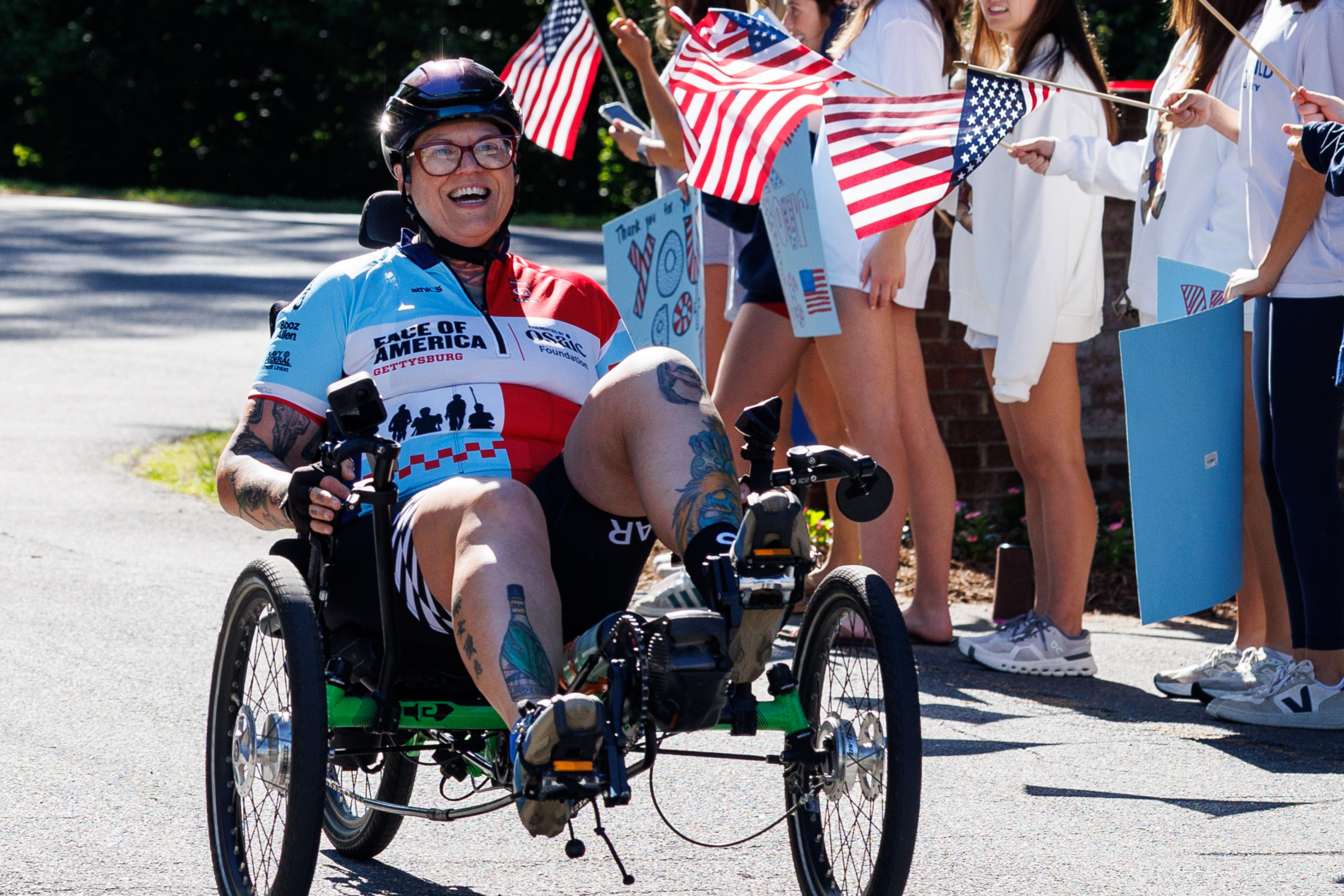
After my father passed away in 2018, I took a long look at myself and decided to become a better version of me. I moved back to Richmond in 2019, met my wonderful husband, and became curious about adaptive cycling. At first I wondered, “How am I going to do these rides if I can’t ride a regular bike with my injury?” Then I rode my first adaptive bike, and a whole new world opened up. Everything clicked.
Rebuilding Trust at Face of America
It takes a lot for me to open up to new experiences, and joining Face of America was one of the best decisions I’ve made. The camaraderie helped me rebuild trust, not only in others but in myself. After FOA, I signed up for my first triathlon and won my division.
I’m doing more and more adaptive athletics, and giving back in my community as a fitness instructor and leader of a seasonal walking group for people in recovery and in care homes. This January, I’ll be one of 25 adaptive running athletes with Team Catapult at the Houston Marathon weekend.
I even found the strength to fly again after my injury. I’ve flown a handful of times now, some of them on my own, and each flight is another healing release.
Breaking Through the Wall
Every year, I set goals for myself to break through the wall that held me back for so long. Maybe I’ll break through it, maybe I’ll jump over it, maybe I’ll dig under it or headbutt my way through. It won’t always be easy, but I am going to get past that wall, whatever it takes. I will be kind to myself. I will be kind to my family. And I will do this healthily the whole way through. I’m letting go of the anger.
Why This Ride Matters
Every mile of Face of America represents more than a cycling challenge—it’s a celebration of inclusion, teamwork, and shared strength. Riders like Whitney remind us why this mission matters
Join Us
Visit our Programs Page to register as a rider, volunteer, or supporter for our annual events.


